The Dullahan: A Journey into the Night of Irish Folklore
I. Introduction to the Dullahan
The Dullahan is a fascinating figure in Irish mythology, often depicted as a headless horseman who rides through the night, heralding death and despair. With its chilling presence, the Dullahan represents the darker aspects of folklore and serves as a reminder of mortality, making it a significant figure in the cultural heritage of Ireland. This spectral being captivates the imagination, embodying the fears and beliefs of ancient Irish society regarding death and the afterlife.
II. Origins and Historical Context
The origins of the Dullahan can be traced back to ancient Irish folklore, where it is believed to have emerged from Celtic traditions surrounding death and the supernatural. The name “Dullahan” is derived from the Irish “Dullahan,” which translates to dark man. This figure is deeply rooted in the Celtic belief system, where death was not seen as the end but rather a transition to another realm.
In early Irish culture, the connection between death and the supernatural was profound. The Dullahan is thought to have evolved from earlier mythological beings associated with the Otherworld, a realm inhabited by spirits and deities. These connections highlight the importance of understanding death as not merely an end, but a part of a larger cycle of existence.
III. Physical Description and Characteristics
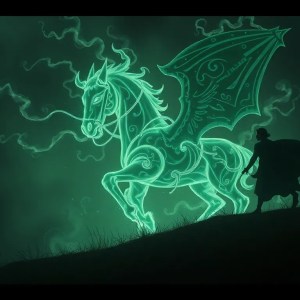
The Dullahan is typically described as a tall, dark figure, draped in a black cloak that billows around him as he rides. The most striking feature of the Dullahan is its headless form, which is said to carry its own head under one arm. The head is often depicted as having a ghastly grin, with eyes that gleam like burning coals. This unsettling appearance serves to enhance the Dullahan’s image as a harbinger of death.
In addition to its terrifying visage, the Dullahan is often accompanied by a black horse, which is equally intimidating. The horse is described as having a skeletal frame and glowing eyes, reinforcing the sense of dread that accompanies the Dullahan’s presence. Together, they symbolize the inevitability of death and the journey into the unknown.
IV. The Dullahan’s Role in Irish Folklore
In Irish folklore, the Dullahan is primarily seen as a harbinger of death, riding through the night to claim the souls of the deceased. It is said that when the Dullahan stops at a house, it signals the imminent death of someone within. The figure is known to call out the name of the person destined to die, adding an element of terror to its already fearsome reputation.
Numerous stories and legends recount encounters with the Dullahan, often depicting it as a relentless pursuer of souls. One popular tale tells of a young woman who, upon spotting the Dullahan, was warned by her mother not to look back. However, curiosity got the better of her, and when she turned, she saw the Dullahan, which heralded her untimely death shortly thereafter.
V. The Dullahan’s Connection to Other Mythical Beings
The Dullahan shares similarities with other figures in Celtic mythology, such as the Grim Reaper in other cultures. Both are embodiments of death, serving as guides for souls transitioning from life to the afterlife. However, the Dullahan is unique in its distinctly Irish characteristics, particularly its headless form and association with the Otherworld.
Additionally, the Dullahan is often linked to the Sidhe, or fae, beings in Irish mythology. These supernatural entities are believed to inhabit the same realm as the Dullahan, further emphasizing the connections between death, fate, and the mystical elements of Irish folklore.
VI. Modern Interpretations and Cultural Impact
In contemporary media and literature, the Dullahan has found a place in various forms of storytelling, from books to films and television shows. This figure has been reimagined in many ways, often appearing as a character who embodies both terror and intrigue. The Dullahan has become a popular figure in horror genres, captivating audiences with its haunting presence.
Moreover, the Dullahan has influenced modern Halloween traditions, symbolizing the darker aspects of the holiday. Its image can be found in decorations and costumes, serving as a reminder of the thin veil between life and death that Halloween represents.
VII. Regional Variations and Folktales
The legends of the Dullahan vary across different regions of Ireland, with each locality contributing its unique twist to the tales. For instance, in some areas, the Dullahan is described as being accompanied by a coffin that he carries, while in others, he is said to ride a chariot pulled by headless horses.
- County Kerry: Here, the Dullahan is often associated with the Banshee, another figure of death in Irish folklore, and the two are sometimes seen as different aspects of the same phenomenon.
- County Clare: In this region, stories frequently depict the Dullahan as less malevolent, acting more as a guide to the afterlife than a bringer of doom.
These regional variations highlight the Dullahan’s adaptability and the rich tapestry of Irish folklore that encompasses different beliefs and practices.
VIII. Conclusion: The Legacy of the Dullahan
The Dullahan remains an enduring symbol of the mysterious and the unknown within Irish culture. Its legacy continues to fascinate and frighten, embodying the universal themes of death and the afterlife. As a figure steeped in folklore, the Dullahan serves as a reminder of the complexities of human beliefs surrounding mortality and the supernatural.
In the modern world, the Dullahan transcends its origins, evolving into a symbol that resonates with audiences far beyond the shores of Ireland. Its chilling presence in stories and media ensures that the legend of the Dullahan will continue to captivate generations to come, reminding us of the shadows that linger at the edges of our understanding.